

Losing a parent or a loved one is hard enough. Then comes the house, and the reality that two, three, or four people now own it together. Selling an inherited house in Texas with multiple heirs is one of the more tangled situations a family can face. The legal side moves slowly, emotions run high, and one person holding out can stall everything. This guide walks you through how it actually works, what your options are, and how to move forward when things get complicated.
What Happens When You Inherit a House From Your Parents in Texas?
When someone dies owning a house in Texas, the first step is determining how title can legally pass. In many cases, that involves probate, although certain deeds and heirship procedures may allow property to transfer without a full probate administration. If there’s a will, the executor named in it takes charge. If there is no valid will, Texas intestacy law determines who inherits and in what percentages based on family relationships and whether the property was separate or community property.
Once ownership is established, each heir or beneficiary receives the interest determined by the will or Texas inheritance law. Those shares are not necessarily equal. If you and two siblings inherited your parents’ home, each of you owns a share of the whole property. No individual co-owner can generally agree to sell the entire property on behalf of all the other owners. One thing worth knowing is that, in some situations, Texas allows an affidavit of heirship to help establish who inherited real property without going through a full probate administration. The affidavit is usually completed by people familiar with the deceased’s family history and then recorded in the county’s real-property records. It does not work exactly like a probate court order, and title companies may have their own requirements before accepting it for a sale. When it is appropriate and the title is otherwise clear, it can help simplify selling an inherited house in Euless.
What Are the Steps to Sell an Inherited House With Multiple Owners?
Once probate is done and ownership is established, selling the home takes a few more steps than a typical home sale, mostly because more people are involved.
1. Confirm Who Owns What
Pull the deed and confirm every heir’s name and ownership percentage. If the title has errors, missing names, or old liens attached to it, those need to be cleared before anything else moves forward. A real estate attorney can help you catch these early so they don’t become a problem at closing.
2. Get the House Appraised
Before anyone can agree on a price, you need an objective number. For a sibling buyout or disputed valuation, an independent appraisal gives everyone a defensible starting point. A formal appraisal gives every heir the same starting point and takes the guesswork out of the conversation. Disagreements over what the home is worth are one of the most common reasons selling inherited property with multiple owners stalls before it even starts.
3. Decide on a Sale Method Together
Some heirs want to list with an agent and wait for top dollar. Others want a faster, simpler exit. Each option comes with different timelines, costs, and net proceeds. A traditional listing may involve showings, possible repair or preparation costs, agent compensation, and a longer marketing period. An as-is cash sale may reduce some of those steps, although the offer typically reflects the property’s condition and the convenience of the sale. A cash sale is faster and skips most of that, though the offer price reflects the as-is condition. Before the group decides, it helps to understand what actually affects your number. This breakdown of how to determine the right price to sell your house gives you a clear picture of what to weigh.
4. Get all Heirs to Sign
If the title has already passed to multiple heirs as co-owners, all owners generally need to participate in a voluntary sale. If the property is still part of an estate administration, however, an authorized executor or administrator may have authority to sell it without obtaining every heir’s signature. All it takes is one person going quiet, changing their mind, or being unreachable, and the sale stops completely. This is why getting everyone aligned early matters. Have the conversation before you hire an agent or accept an offer, not after.
5. Handle Outstanding Debts on the Property First
If the home has a remaining mortgage, unpaid property taxes, or liens, those get settled from the sale proceeds before anything is distributed. It’s worth pulling a title report early so you know exactly what’s attached to the property.
6. Split the Proceeds
Once closing costs and any debts are cleared, the remaining proceeds are distributed according to each heir’s legally established ownership share. Those shares are not always equal. For example, if three heirs each legally own one-third of the property, each would receive one-third of the net proceeds. The title company or closing attorney handles the distribution, so it’s clean and documented.
Every extra heir adds another layer of coordination. The families that get through it smoothest are the ones who have honest conversations early, about the home’s value, the sale method, and what everyone actually needs from it.
How Can I Buy Out My Siblings' Shares in an Inherited Property?
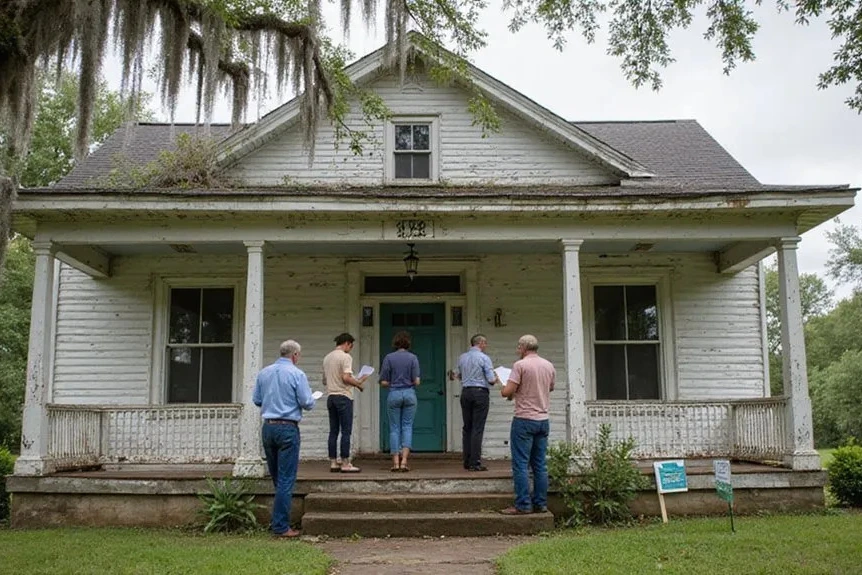
Sometimes one person wants to keep the house, and the others are ready to move on. That’s where a sibling buyout comes in. One heir pays the others for their share of the property and becomes the sole owner. A buyout works well when one sibling has a strong connection to the home and the financial ability to make it happen. The key is getting an appraisal everyone trusts; that single step prevents most of the friction.
Here’s how it typically works:
- Get an independent appraisal: This gives everyone a fair market value to work from. If you skip this and try to agree on a number informally, it almost always leads to arguments.
- Calculate each person’s share: If the home is worth $300,000 and there are three equal heirs, each share is worth $100,000. The buying sibling pays the other two their portions.
- Agree on terms and put it in writing: A real estate attorney should draft the buyout agreement. This protects everyone.
- Sort out financing: Not everyone has $200,000 sitting around. The buying sibling can look into financing options, which may include refinancing or other secured financing once ownership and title requirements are satisfied. A lender or probate/real-estate attorney can explain which options are available in the specific situation. Some families also agree to installment payments over time, where the buying sibling pays the others in portions with interest.
- Transfer the title: Once payment is made, the deed gets updated to reflect sole ownership. This gets recorded with the county.
What If a Sibling Refuses to Sell the Inherited House in Texas?
If one heir won’t agree to sell and a buyout isn’t on the table, you still have a path forward. A co-owner may be able to seek a court-ordered partition under Texas law. If the property qualifies as “heirs’ property,” the special procedures in Texas Property Code Chapter 23A may apply. The process can ultimately result in a buyout, a physical partition of the property, or a court-ordered sale, depending on the circumstances and applicable Texas partition law. The refusing heir cannot block it outright.
Partition litigation can become expensive and time-consuming, particularly when ownership, valuation, reimbursements, or sale terms are disputed. Before it gets there, most attorneys recommend mediation first. A neutral third party helps the family reach a decision without a judge. It’s faster, cheaper, and a lot easier on everyone involved.
Are There Tax Implications When Selling an Inherited Home?
The most important concept here is the stepped-up basis. When you inherit a property, the IRS resets its value to what it was worth on the day the original owner died, not what they originally paid for it. So if your parents bought the home for $80,000 decades ago and it’s worth $320,000 when you inherit it, your basis is $320,000. If the basis is $320,000 and you later sell for roughly the same amount, there may be little or no taxable capital gain.
This can significantly reduce the capital gains tax for families who sell relatively soon after inheriting. The longer you wait and the more the property appreciates after the date of death, the more you could potentially owe on that gain.
A few other things to know for Texas:
- Texas has no state income tax, so there’s no state-level capital gains tax to worry about.
- For deaths in 2026, the federal basic estate-tax exclusion is $15 million, so federal estate tax does not apply to most estates. Most families don’t hit that threshold.
- Depending on whether the estate or the heirs own the property at the time of sale, any gain or loss may be reported by the estate or by the individual heirs.
If the estate is complex or the numbers are significant, talk to a CPA before closing. It’s a short conversation that can help you save a significant amount of money.
Can You Sell an Inherited House As-Is Without Repairs?
For families with multiple heirs, selling an inherited house as-is is often the cleanest way out. The problem with a traditional listing is that someone has to decide what repairs to make, who pays upfront, and who manages the work. One sibling might want to invest $40,000 to get top dollar. Another might not have the money or the patience. That disagreement alone can stall a sale for months.
With an as-is sale, a cash buyer makes an offer on the home in its current condition. You share it with every heir, everyone agrees, and you sign at closing. There is one offer and one closing, and the proceeds are split among the owners. No repair debates, no contractor coordination, no carrying costs piling up while the home sits on the market. If the house has foundation issues or years of deferred maintenance on top of everything else, with an as-is sale, the buyer takes the property’s existing condition into account when making the offer.
This is exactly the kind of situation Euless Local handles. They buy inherited homes as-is across Euless and the Fort Worth area, work directly with all heirs, and can turn around a cash offer within 24 hours.
Conclusion
Selling an inherited house with multiple heirs is rarely simple, but it’s also not impossible. The legal path is there, including probate, clear title, and all signatures at closing. The harder part is usually getting everyone to agree on what to do and when.
If the house needs work, everyone’s in different cities, or one person is dragging their feet, a cash sale is often the fastest way to give every heir their share cleanly. Euless Local works with families in exactly this situation across Euless and the Fort Worth area, no pressure, no fees, just a fair offer and a timeline that works for you.
Ready to talk through your options? Call us at 817 305 8555 or reach out at eulesslocal.com
FAQs
Do all heirs have to agree to sell a house in Texas?
If the heirs already hold title as co-owners, all owners generally must participate in a voluntary sale. If the property remains in estate administration, an authorized executor or administrator may have authority to sell it without every heir signing. If one person refuses, the sale cannot close. The only way around it is a partition lawsuit, which forces a court-ordered sale, but that takes time and money.
How do I sell an inherited house fast for cash in Fort Worth?
You can work with a local cash buyer who specializes in inherited properties. They buy as-is, skip the agent and listing process, and can close in days. Make sure all heirs are aligned before you reach out so the process moves quickly. See how to sell your house fast in Euless, TX, for a full picture of how cash sales work.
What if one sibling is already living in the inherited house and won’t leave?
This is more common than people think. A sibling’s occupancy does not automatically require them to pay rent to the other co-owners. Rent or reimbursement claims may arise in certain circumstances, such as the exclusion of another co-owner, rental income, or an equitable accounting in a partition case. If they refuse to cooperate with a sale, the other heirs can pursue a partition lawsuit to force a resolution.
Can an inherited house be sold before probate is complete in Texas?
A house can sometimes be sold during probate by an executor or administrator with the required authority. In other cases, title must first be established or transferred before a voluntary sale by the heirs can close.
What happens to the mortgage if the inherited house still has one?
The mortgage doesn’t disappear. It stays attached to the property and has to be dealt with before or at closing. Heirs can keep making payments while the sale is being arranged or pay off the mortgage from the proceeds at closing. They should contact the mortgage servicer promptly. Federal rules provide protections for certain successors in interest, although formally assuming liability, modifying the loan, or refinancing may involve additional lender or servicer requirements.
© 2026 Euless Local. All rights reserved. Privacy Policy | Terms & Conditions
Subscribe To Our Weekly Newsletter
Get expert tips, market insights, and updates on the Euless housing market